Astronomer, SETI Institute
Visiting Researcher, University of California, Berkeley
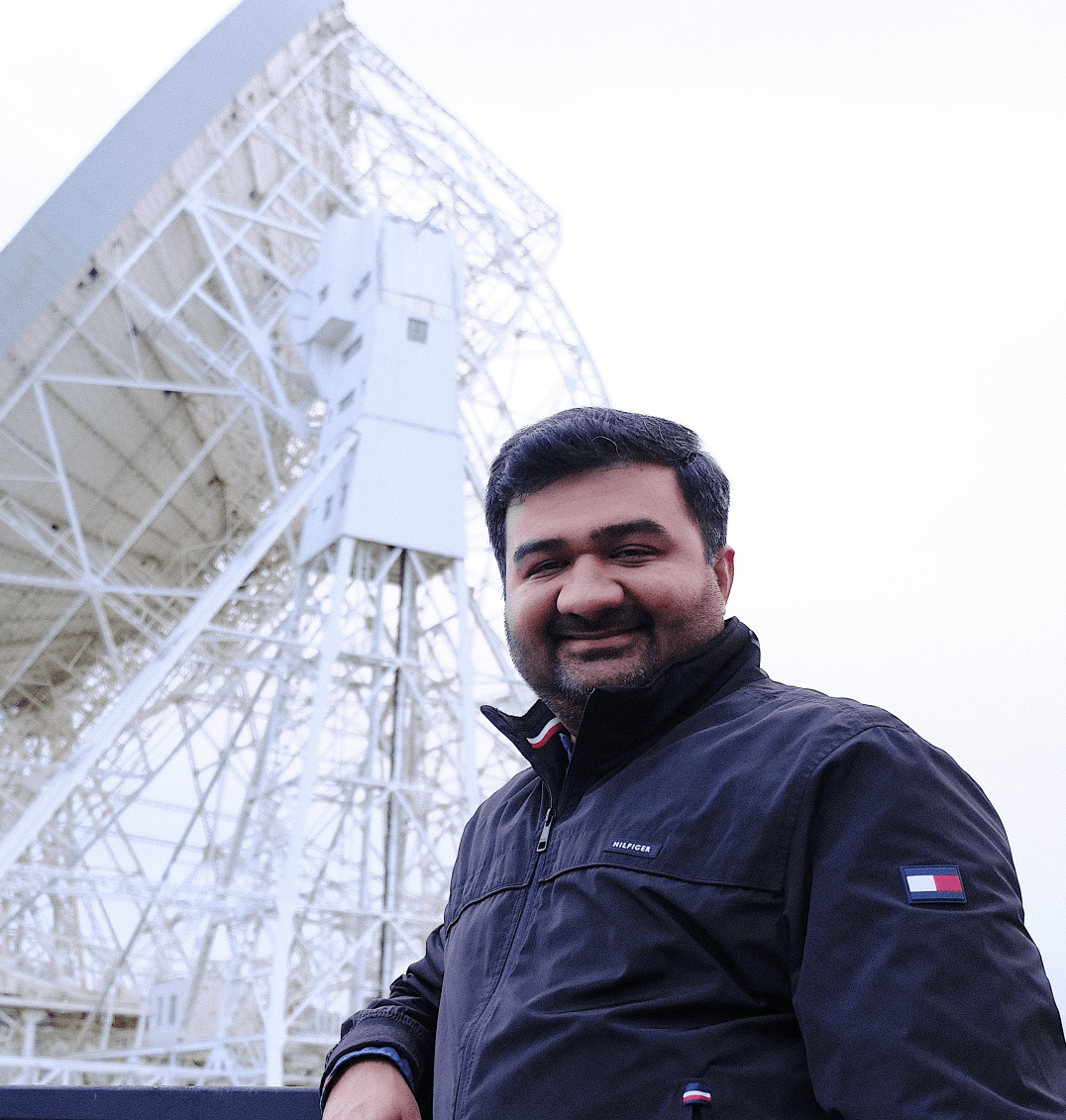
I am a full-time Astronomer at the SETI Institute and Visiting Researcher at the University of California, Berkeley interested in developing novel algorithms to search for the evidence of technologically advanced extraterrestrial life, studying Fast Radio Bursts, and understanding radio emission mechanism of neutron stars. I am a radio astronomer with a Ph.D. in Physics from National Center for Radio Astrophysics, a Tata Institute of Fundamental Research center in Pune, India. I am also Principal Investigator for four research grants at the SETI Institute, spanning efforts from developing SETI-focused curricula for community colleges to detecting anomalies in exoplanet transit light curves.
(vgajjar AT seti DOT org)
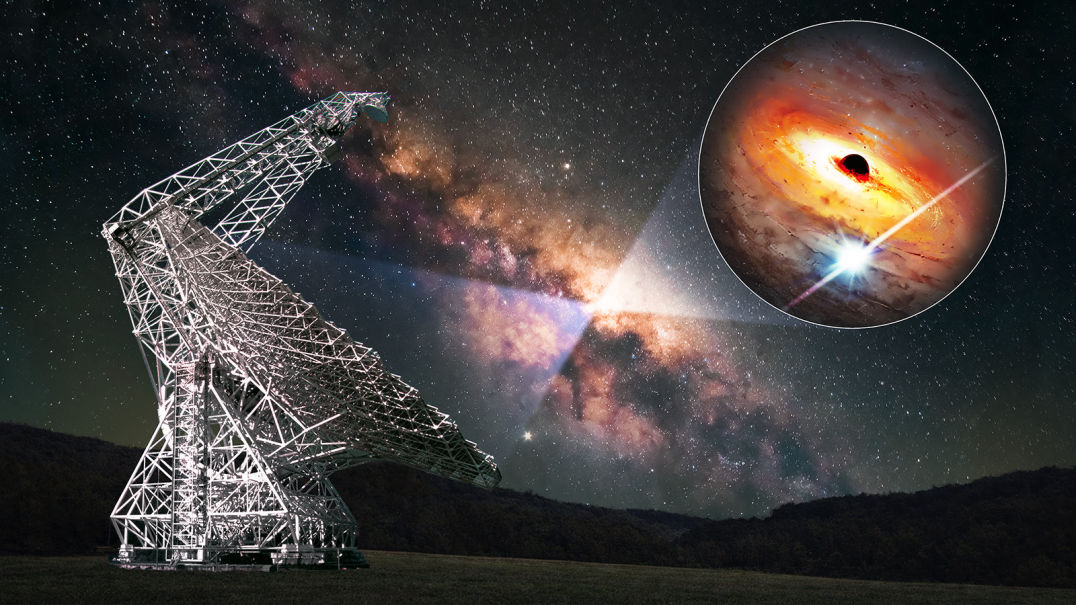
On February 9, 2026, we published our paper describing a deep survey of the Galactic Center in search of pulsars, carried out as part of the Breakthrough Listen program. We identified an intriguing 8.19-millisecond pulsar candidate that we named the Breakthrough Listen Pulsar (BLPSR). While the signal shows several features consistent with a real astrophysical source, we were unable to confirm it because it was not detected again in follow-up observations. This page summarizes the result and explains what it could mean — if it is real, and if it is not.
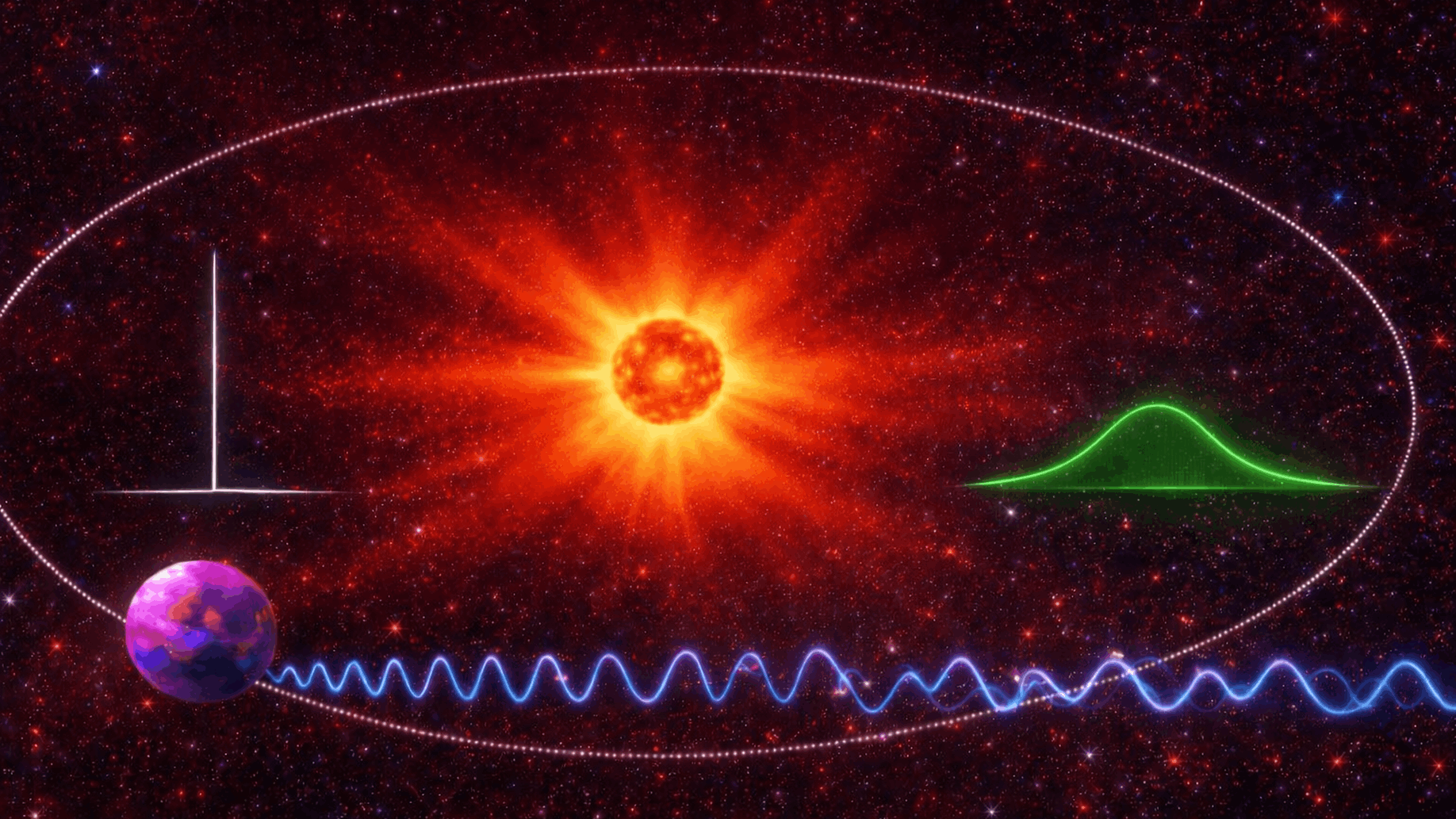
SETI often searches for very thin, sharp radio lines. Our paper shows that the plasma around a signal’s own star can spread that line out in frequency, especially when the signal passes close to the star. The authors build a model that links the amount of spreading to observing frequency, star type, and viewing geometry, and they test it using many spacecraft measurements in our solar system. In simulations of a 1 GHz survey of one million nearby stars, about 70% of systems show more than 1 Hz of spreading and more than 30% show more than 10 Hz, with M-dwarf systems hit the hardest. At 100 MHz the effect is much stronger. CMEs are rare along the line of sight, but when they happen they can broaden signals by thousands of Hz. The main result is that this spreading can make real signals look weaker than expected and easier to miss in standard narrowband searches.
MORE
Breakthrough Listen is humanity’s largest and most comprehensive initiative dedicated to the search for technologically advanced extraterrestrial life. As a Project Scientist for Breakthrough Listen, I collaborate with multiple leading radio observatories around the globe to facilitate technosignature searches. These include the Sardinia Radio Telescope (Italy), LOFAR-SE station (Sweden), LOFAR-IE station (Ireland), FAST telescope (China), and the Giant Metrewave Radio Telescope (India).
In collaboration with the SETI Institute and with support from Amateur Radio and Digital Communication (ARDC), the ARISE curriculum brings hands-on, skills-focused learning to classrooms. Designed for courses in astronomy, digital communication, signal processing, and electronics, ARISE uses the search for extraterrestrial intelligence (SETI) as a gateway to explore real-world applications with GNU Radio and data from world-class telescopes like the Allen Telescope Array. This project-based approach equips students to problem-solve, collaborate, and think critically while engaging with authentic scientific data. By bridging theory and practice, ARISE inspires curiosity and prepares students with job-ready skills.
Narrowband technosignatures passing through an exoplanetary plasma environment (Exo-IPM) can suffer spectral broadening and scintillation, reducing their detectability. While interstellar scattering is well studied, the effects of stellar winds, flares, and CMEs remain poorly constrained. Using turbulence scaling laws extended to active M-dwarfs, in this project we show that Exo-IPM broadening can reach 10–100 Hz at low frequencies, severely impacting narrowband SETI searches. Survival-function analysis across stellar and orbital parameters suggests these effects may contribute to the “Great Silence,” underscoring the need for mitigation strategies in future surveys such as SKA-Low.
Machine learning (ML) is transforming exoplanet discovery, moving beyond traditional transit methods to identify anomalies in stellar light curves. One exciting possibility is detecting alien megastructures—large, irregular constructs whose transits would leave distinct, non-spherical signatures. This project will develop an ML tool to infer object shapes directly from light curves and rank candidates based on deviations from circular forms. Applied to Kepler and TESS data, the approach will flag highly irregular shapes as potential megastructures. By systematically exploring these anomalies, the work broadens technosignature searches and contributes to answering the fundamental question: Are we alone in the universe?
Following are some of my past and ongoing projects on the quest to answer humanity's most fundamental question; are we alone in the Universe?
Fast Radio Bursts are enigmatic and the most mysterious objects in modern astrophysics. Following are my past and ongoing projects to understand nature and origin of FRBs.
Neutron stars are some of the most extreme astrophysical objects. My PhD thesis focused on understanding pulsar emission physics. Following are my past and ongoing research projects on this subject.
Radio Astronomy must contend with large data volumes and a complex background of radio frequency interference of anthropogenic origin. Here are some of my projects to tackle these challenges.
I closely work with engineers to deploy novel digital hardwares to various radio telescope. Here are some of my commissioning projects.
I also have a passion for building automated signal processing pipelines.
Astronomy is fun! I truly enjoy sharing this joy and discussing wonders of cosmos. Here are some of my public talks and engagements.
Made with Mobirise bootstrap themes